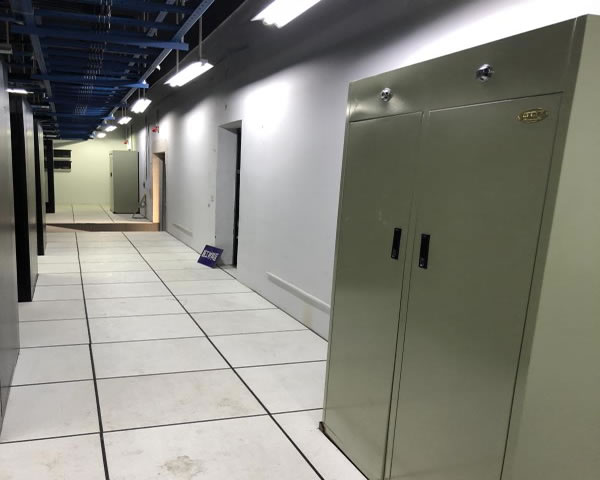
network performance and latency report of korean organic vps in cross-border business
question 1: what kind of network bandwidth and availability can vps in korean organic rooms usually provide?
vps deployed in organic rooms in south korea generally provide uplink/downlink bandwidth solutions from 100mbps to multi-gbps, commonly shared 100mbps or dedicated 1gbps ports. domestic backbone and international export interconnections are good, and many computer rooms have direct connections or good peering with major isps and cloud vendors, so availability (uptime) can usually reach 99.9% and above. it should be noted that the peak bandwidth and anti-congestion capabilities depend on the operator, the billing mode (billing by traffic or by peak port width) and whether there is anti-ddos protection.
key indicators
metrics of concern include: bandwidth limit, average throughput, packet loss rate, jitter, and sla commitments. high-quality organic rooms will disclose the list of upstream operators and peer nodes to facilitate the evaluation of real performance.
question 2: what is the approximate delay when accessing other countries from a korean vps ?
latency varies significantly depending on the target area and network path. general experience range: about 5-30ms to korea/japan; about 30-80ms to mainland china (specific differences vary greatly by province); about 50-120ms to southeast asia (singapore, malaysia); about 100-180ms to the west coast of the united states; about 170-300ms to europe. the above values are common measured round trip delays (rtt), which may be higher during peak hours or when experiencing congestion/detours.
influencing factors
the main factors affecting latency include: physical distance, submarine cable paths, peering relationships between isps, egress bandwidth congestion, and intermediate router processing capabilities. cross-border business should select nodes and acceleration strategies based on target user distribution.
question 3: how to evaluate and test the network performance and latency of korean vps?
it is recommended to use a combination of tools for a comprehensive assessment: ping (baseline rtt and packet loss), traceroute/mtr (routing hop and detour detection), iperf3 (bandwidth and throughput), speedtest cli (subjective bandwidth test), http request and concurrency stress test (application layer experience).
common testing procedures
1) conduct multiple tests at different time periods (peak/off-peak); 2) measure representative nodes in the target market respectively; 3) record packet loss, maximum/average rtt, jitter and bandwidth; 4) use long-term mtr to discover intermittent packet loss.
testing considerations
avoid drawing conclusions from just a single test, and pay attention to the possibility that icmp is flow-limited (ping may be prioritized), so testing combined with tcp/udp levels is more reliable.
question 4: how to optimize the network latency and performance of korean vps for cross-border e-commerce or saas?
optimization strategies include: deploying global cdn and edge caching to reduce cross-border requests; using anycast or deploying pop in the target market to achieve nearest routing; cooperating with computer rooms or cloud providers with good international peering to reduce transit; enabling http/2 or quic to reduce handshake and retransmission delays; compressing and merging static resources at the application layer to reduce the number of requests.
advanced optimization
dedicated lines or sd-wan can be used to connect major customers, configure bgp optimal routing, introduce tcp acceleration or wan optimizer. for real-time applications, you need to pay attention to jitter and packet loss and deploy recovery mechanisms (fec, retransmission policy).
question 5: what network indicators and contract terms should you pay attention to when choosing an organic vps in korea?
be sure to check the sla details (availability and compensation mechanism), bandwidth billing method (95th percentile, monthly or by traffic), burst bandwidth policy, upstream operator and peer list, ddos protection capabilities, public network ip number and routing policy, and whether it supports bgp/multi-exit. also confirm the monitoring and alerting api, technical support timeliness (especially across time zones) and migration terms.
purchase list example
it is recommended to obtain: network test report, historical availability data, bandwidth peak and packet loss history, upstream list and emergency contact information when purchasing. the actual access path and business sla of the target users shall prevail during evaluation.
- Latest articles
- Practical Steps To Establish A Brand Communication Circle In Amazon Japan QQ Groups
- Legal Compliance Perspective: Assessing Usage Scenarios And Risk Control For Taiwan's Multi-IP Server Clusters
- Cost Control Methods For Purchasing Native IP From SK In Korea During Overseas Business Expansion
- A Study On Which Servers Japanese People Are On, And The Impact Of Language Environment On Guilds And Teams
- Enterprise Procurement Guide: Where To Buy Taiwan Cloud Servers To Get Stable After-Sales Support
- Detailed Explanation Of The Taiwan VPS Renewal Process: Beginners Can Take Every Step From Logging Into The Console To Completing The Renewal
- Comprehensive Evaluation Report Malaysia CN2 Covers Packet Loss Jitter And Packet Loss Recovery Capability
- Alibaba Cloud Vietnam Server Mirroring And Backup Solution To Enhance Business Recovery Capabilities
- Is It Illegal To Buy A US High-defense Server? Compare With Key Points For Data Privacy Protection And Cross-border Transmission Compliance
- Best Practices And Availability Enhancements For Enterprise-level Deployment Of Hong Kong CERA's High-protection VPS Native IP
- Popular tags
-

Which Business Scenarios Are Suitable For VPS In South Korea, And These Deserve Long-term Attention And Analysis?
From the perspectives of latency, bandwidth, compliance, cost, and operations, this analysis examines which business scenarios are suitable for VPS in South Korea. It outlines the advantages and disadvantages, deployment recommendations, and long-term considerations to assist with selection and planning. -

Security And Ddos Protection Are The Key Influencing Factors In The Decision-making Process Of Which Korean Vps Is Better
from the perspective of security and ddos protection, the key factors that must be considered when choosing a korean vps, practical detection methods and decision-making suggestions are explained in detail to help enterprises and developers make the optimal choice between cost and protection. -

Vps Sharing Of Usage Experience And Configuration Skills In Zhihu Korea
share your experience and configuration skills in using korean vps to help users better use vps.